
ALGORITHMS OF LIFE
How observation becomes power — and curiosity becomes momentum

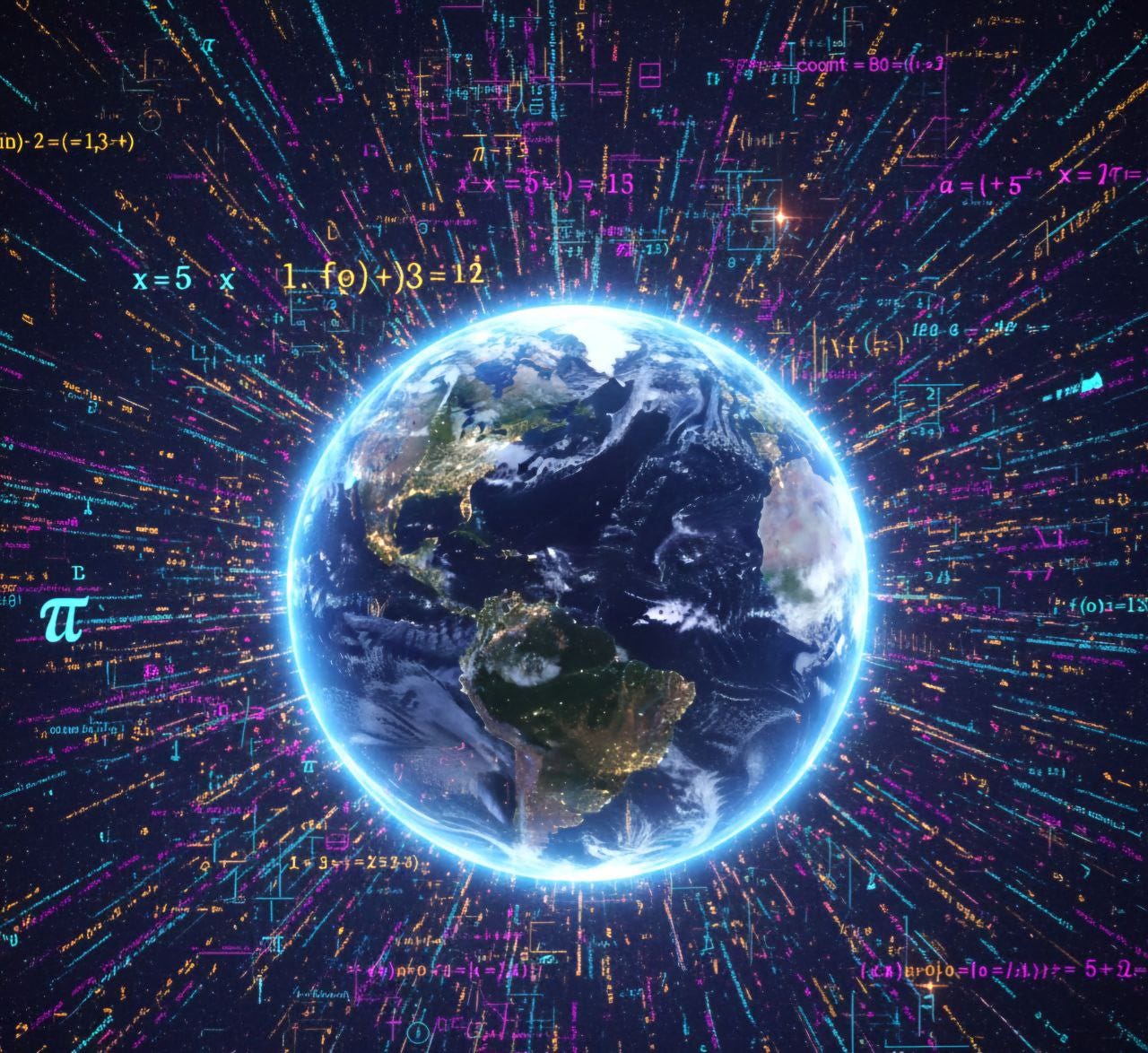
Your feed isn’t random. Neither is your life.
The closer you look, the more patterns reveal themselves — small loops, recurring triggers, cycles that come back in new forms.
Since the beginning of civilization, humans have tried to decode these rhythms. Religion attempted to impose order on chaos. Science later broke natural repetition into formulas and measurements.
And yet each of us builds our own private algorithms.
For someone, it’s a lucky dollar in the wallet.
For someone else — a family photo on the desk.
One invites fortune. The other anchors what truly matters.
Tiny switches, but they shape the internal system far more than we like to admit.
Social platforms behave the same way.
Once, one of my Threads posts suddenly hit 38,000 views.
For an account with 650 followers, it was an anomaly.
The only explanation: the algorithm picked it up and carried it through the tunnels of visibility.
Life works similarly — a small action can launch an outsized chain reaction.
The Global Patterns
Wars follow algorithms too.
Napoleon’s famous line — “Fortune favors the big battalions” — wasn’t bravado, it was pattern recognition.
Sun Tzu tried to break battlefield chaos into stages, rhythms, timing.
Conflict repeats itself — only in harsher form.
Finance is built on its own predictable breaks and pressure points.
Nassim Taleb spent years studying how systems fail — and his ideas shaped crisis strategies across the world.
Politics follows similar waves.
What we see today isn’t disorder — it’s another turn in a long global loop.
Populists rose to power and broke old rules: Trump, Orbán, Milei, Zelensky, and others.
China is balancing on the edge of economic overload.
Millennials and Gen Z refuse to serve as cannon fodder in someone else’s geopolitical drama.
Local conflicts link together and grow into larger ones — as they always have.
Autocracies drift toward one another once again, echoing the pre-WWII atmosphere.
Taken separately, these facts look random.
Together — they form a system.
The world moves in a spiral.
History has already seen what happens when multiple autocrats consolidate power at the same time.
In 1939 the breaking point appeared in Poland — where rival ambitions collided.
In 2022 that point appeared in Ukraine.
And today, once again, that fault line runs directly through us.
The “Global South” is forming its own bloc.
Russia — a 25-year regime built around a single autocrat.
North Korea — a starving nation with overflowing weapons depots.
Iran — a government that has dreamed of nuclear status for decades.
China — communist language layered over billionaire capitalism.
The picture resembles the pre-WWII world too closely to ignore.
The New Reality
Yet this moment has another side.
Technological progress is accelerating faster than the frameworks meant to contain it.
A new reality has already arrived — even if not everyone has acknowledged it.
Artificial intelligence is a turning point.
A moment when human capability expands faster than old models can adapt.
Its influence will multiply.
In the coming years, AI will accelerate everything — economies, culture, politics, warfare.
We are living at the moment when the old code of the world is being rewritten.
Cycles exist only as long as someone notices them.
Everything humanity has achieved — and everything it will achieve — grows from two traits: curiosity and observation.
We carry them from childhood, and they remain our sharpest tools.
Once you start seeing the patterns, much of life becomes clearer.
Light always defeats darkness. That’s how the algorithms of life work.
What about you?
If this resonated with you, share the patterns you’ve noticed in your own life.
Sometimes one person’s observation helps another decode their own algorithm with surprising clarity.